Packaging inspection with computer vision for real production lines
Detect seal issues, label errors, fill level inconsistencies, and packaging defects earlier.
Qualens helps industrial teams automate packaging inspection with computer vision so packaging quality inspection becomes more consistent, easier to review, and less dependent on manual visual checks or unstable legacy systems.
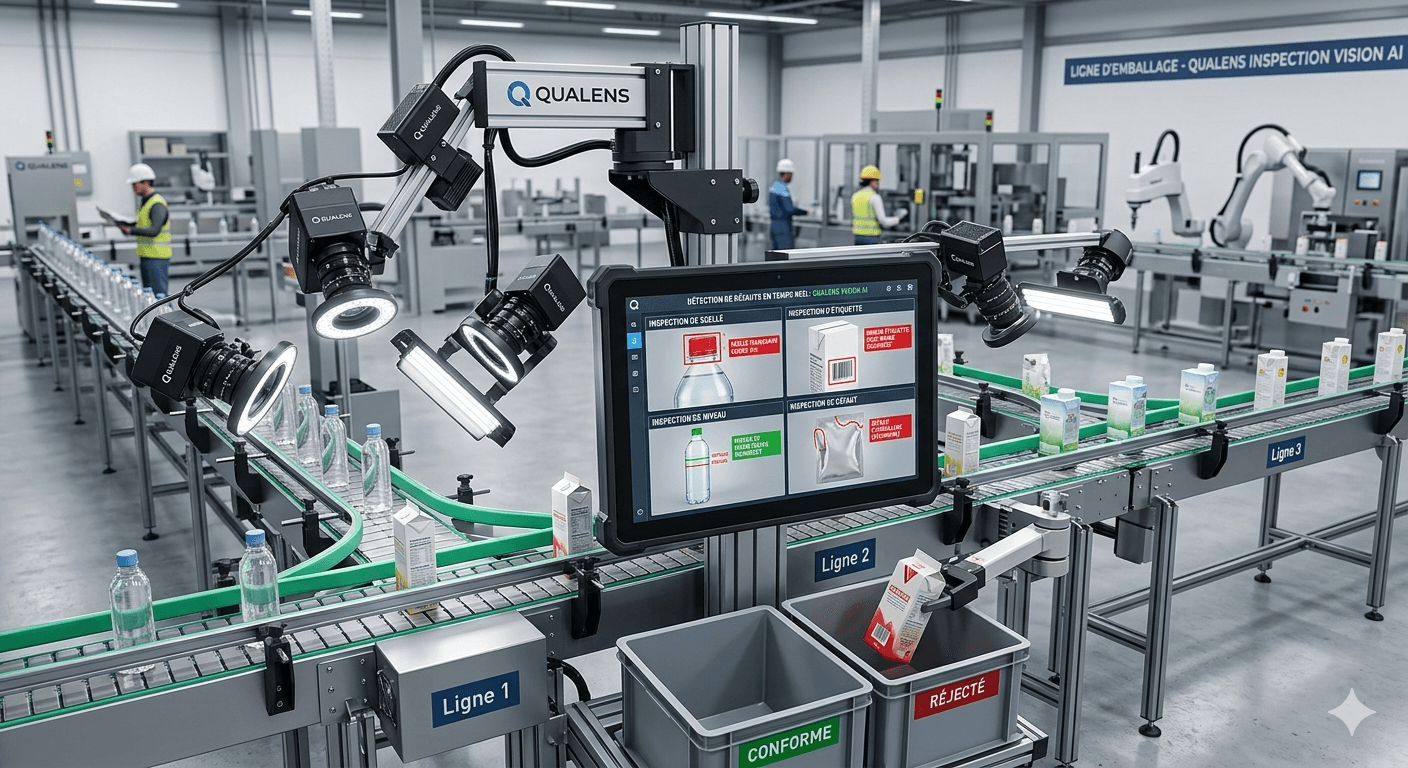
Checks
Seal + Label
Review
Focused
Packaging line pain points
Packaging teams deal with inspection problems that are hard to keep stable
Packaging inspection systems need to handle line speed, changing SKUs, packaging variability, and the operational limits of manual visual inspection. That is where instability usually appears.
Manual inspection does not scale
Packaging lines move too fast for manual visual inspection to stay consistent across shifts, formats, and long production runs.
Defects are missed or caught too late
Seal issues, label errors, damaged packaging, and fill level inconsistencies can pass through before teams have time to react.
False rejects disrupt production
Unstable inspection creates waste, line disruption, and more review effort when good units are flagged too often.
SKU variation makes inspection harder
Different formats, print layouts, closures, and packaging materials create variability that many inspection setups struggle to absorb.
Rule-based systems become brittle
Legacy machine vision for packaging inspection often depends on thresholds that break when lighting, orientation, or presentation changes.
Operator attention carries too much weight
Packaging inspection often still depends on human vigilance for uncertain cases, which is difficult to sustain on busy lines.
What computer vision helps inspect
Practical packaging inspection use cases on real lines
Seal inspection
Inspect seals for missing, damaged, incomplete, or visually inconsistent presentation before product moves downstream.
Label verification
Check presence, placement, skew, and basic conformity for packaging labeling inspection on changing product formats.
Print and code inspection
Review visible print, code placement, or packaging marking conditions that matter for production line quality control.
Fill level inspection
Support package fill level inspection where visible fill inconsistencies affect quality assurance and rework risk.
Cap or closure verification
Verify cap, closure, or lid presentation when packaging quality inspection depends on reliable closure checks.
Count and presence verification
Use computer vision package inspection to confirm expected item presence, count, or pack composition before release.
Damaged packaging detection
Detect unusual dents, tears, crushed packaging, or visible packaging conformity issues earlier on the line.
Missing component detection
Check for absent inserts, missing elements, or incomplete packaging presentation in automated inspection workflows.
Industry applicability
Where packaging inspection with computer vision is most relevant
Food packaging inspection, pharmaceutical packaging inspection, medical packaging, beverage packaging, and packaged consumer goods can all be strong candidates. Feasibility still depends on line setup, image conditions, product variation, and defect types.
Food packaging inspection
Useful where seals, labels, fill level, and package integrity affect quality assurance and customer risk.
Beverage and bottling lines
Relevant for lines where packaging variability, closure checks, label verification, and fill consistency matter at speed.
Pharmaceutical packaging inspection
Applicable where packaging quality inspection needs to be more controlled, repeatable, and easier to review.
Medical packaging
Helpful where packaging conformity, seal presentation, and missing-element detection require reliable visual checks.
Consumer goods and packaged products
Relevant where multiple SKUs, frequent format changes, and product presentation differences make inspection unstable.
Why traditional inspection struggles
Manual review and rigid rule-based systems often lose stability over time
Benefits and business value
Better packaging inspection creates operational leverage
How engagement works
Start with the packaging inspection problem, not a broad rollout
01
Understand the packaging inspection challenge
Start with the actual packaging problem: seal inspection, label verification, fill level issues, packaging conformity, or manual review pressure.
02
Review line context and defect categories
Look at product formats, image conditions, packaging variability, and the types of defects that matter operationally.
03
Assess feasibility
Evaluate whether the packaging inspection use case is a good fit based on cameras, line setup, production conditions, and inspection objectives.
04
Run a focused pilot
If the use case is promising, validate it in a narrow pilot before deciding whether to move toward broader production deployment.
Why Qualens
Practical packaging inspection work with an execution-focused team
We focus on computer vision package inspection that helps quality and operations teams run better packaging inspection systems in real production conditions. The priority is operational fit, feasibility, and measurable quality improvement.
FAQ
Practical questions from packaging and quality teams
What types of packaging defects can computer vision detect?
That depends on the use case, but common examples include seal issues, label errors, print or code problems, fill level inconsistencies, damaged packaging, missing elements, and packaging conformity issues.
Can this work with existing cameras?
Sometimes yes. Existing cameras can often be reviewed first, although some packaging inspection systems work better with different placements, optics, or lighting conditions.
Is this relevant only for large manufacturers?
No. Larger manufacturers often have more line complexity, but packaging inspection with computer vision can also be valuable for smaller environments when the inspection challenge is clear and repetitive enough.
Can packaging inspection start with a pilot?
Yes. A focused pilot is often the most practical way to validate machine vision for packaging inspection before a wider rollout.
How do you assess feasibility?
Feasibility depends on the line setup, product variation, image conditions, packaging materials, and the exact defect categories that matter most to the team.
Can this work for food or pharmaceutical packaging?
Yes, those are important areas where packaging quality inspection matters. The right fit depends on the inspection goal, packaging variability, and operating conditions.
What if our current vision system already exists but is unstable?
That is a common situation. Packaging inspection systems that rely on brittle rules can become unstable over time, especially across changing formats and real production conditions. Reviewing that instability is often a good starting point.
Want to review a packaging inspection use case?
Discuss a packaging inspection system challenge, a focused pilot, or a feasibility review around seals, labels, fill level checks, packaging conformity, or manual inspection bottlenecks.