Automated visual inspection systemsneed more than software alone.
Qualens helps industrial teams think about automated visual inspection systems as complete production tools: imaging, software, decision logic, and workflow integration working together under real line constraints.
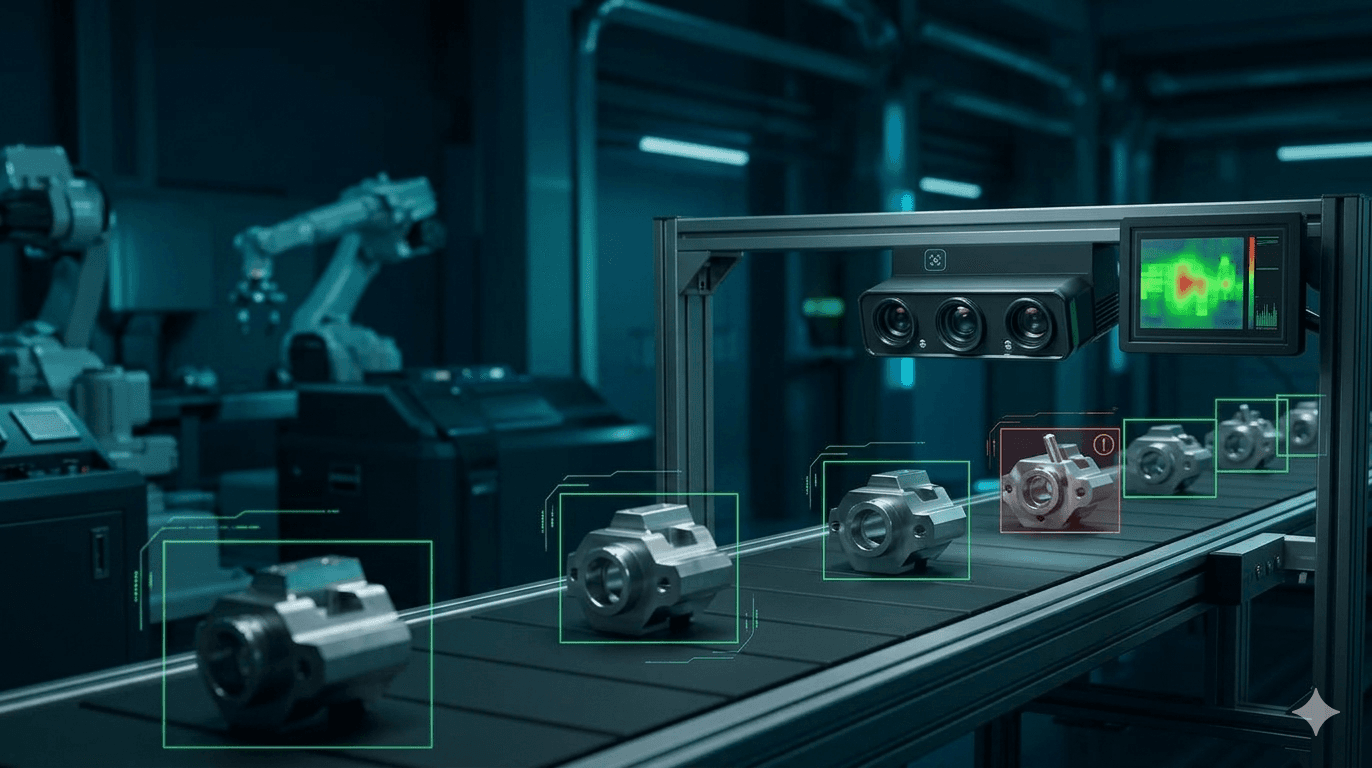
Camera
Imaging
Software
Decision
Workflow
Integration
What a system includes
An automated visual inspection system is a production workflow, not a standalone feature
Buyers looking for automated visual inspection solutions often need a full system perspective. The practical question is not only what can be detected, but how the inspection result becomes reliable and usable on the line.
Imaging layer
Cameras, optics, lighting, and mounting all shape the quality of the visual signal. Many system problems begin at this layer rather than in the software.
Inspection software
Automated visual inspection software analyzes images, classifies defects, verifies expected conditions, and handles uncertainty in a way that suits the use case.
Decision layer
A production system needs decision logic: pass, reject, review, alert, or traceability events based on what the inspection output means for the operation.
Workflow integration
Industrial automated visual inspection systems have to fit with reject mechanisms, operator review, quality workflows, and the broader production environment.
Why system design matters
Production value depends on more than detection accuracy
A model alone does not solve production inspection
Teams often search for automated visual inspection systems because they need a reliable inspection process, not just a model that performs well on a sample dataset.
Deployment constraints shape performance
Camera position, lighting control, line speed, product spacing, and operator workflow all affect whether a system performs reliably in production.
System stability matters as much as detection quality
If the system creates too many uncertain cases, false rejects, or maintenance headaches, the operational benefit quickly disappears.
Integration changes the value of inspection output
Inspection results need to connect to decisions, review actions, or production signals. Otherwise the system produces data without improving operations.
How to think about deployment
Automated visual inspection systems should be designed around production decisions
Operational value
Better systems improve inspection decisions, not just image analysis
Related pages
Follow the cluster from systems into production and industry-specific pages
Automated Visual Inspection
Start with the broader pillar page for the full cluster and core inspection concepts.
Automated Visual Inspection for Manufacturing
See how system decisions connect to line performance, assembly checks, and production constraints.
Automated Visual Inspection for Pharma
Explore a more quality-sensitive view of inspection systems in pharmaceutical contexts.
Packaging Inspection with Computer Vision
Review packaging-focused use cases where system stability matters across labels, seals, and fill checks.
FAQ
Practical questions about automated visual inspection systems
What is included in an automated visual inspection system?
A complete system usually includes cameras, optics, lighting, inspection software, decision logic, and integration into the production or quality workflow. In many cases, operator review and traceability also matter.
How is an automated visual inspection system different from a model?
A model is only one part of the solution. A production system also has to handle image capture, system stability, reject logic, review flow, and how results are used operationally.
Can existing cameras be reused?
Sometimes yes. Existing cameras may be suitable, but the answer depends on image quality, placement, optics, lighting, and what the inspection task actually requires.
Why do some visual inspection systems fail after deployment?
Common reasons include weak imaging conditions, poor workflow fit, unstable decision thresholds, high variation across products, and too little attention to operator review or maintenance realities.
Should automated visual inspection systems start with a pilot?
Usually yes. A focused pilot helps teams validate not only inspection performance, but also system fit, integration needs, and how the operation will use the output.
Who should evaluate the system internally?
The best evaluations usually involve quality, operations, engineering, and whoever will own the inspection workflow day to day once the system is in production.
Need to assess an automated visual inspection system?
Share your imaging setup, defect categories, workflow constraints, or integration questions and we can review whether a focused pilot makes sense.